



























DIY Fasting Mimicking Diet: is it really a good idea?
In recent years, the Fasting Mimicking Diet (FMD) has become increasingly popular among people looking to support their overall well-being, promote fat loss, and support the body's natural cellular renewal processes.
At the same time, more and more people are searching online for information about how to follow a DIY Fasting Mimicking Diet, assuming that cutting calories for a few days or copying a meal plan found online is enough.
But is it really that simple?
The answer is no.
The Fasting Mimicking Diet isn't simply a low-calorie diet, nor is it about just eating very little for five days. Instead, it is a nutritional protocol developed through years of scientific research and designed to trigger specific metabolic pathways while still providing the body with carefully selected nutrients.
That's why trying to recreate the diet on your own may compromise its effectiveness and, in some cases, increase the risk of following a nutritionally unbalanced protocol.
In this article, we'll look at the potential pitfalls of a DIY Fasting Mimicking Diet and explain why choosing a scientifically designed kit like ProLon is the safer approach.
What is the Fasting Mimicking Diet?
The Fasting Mimicking Diet is a nutritional program developed by Professor Valter Longo and researched at the Longevity Institute at the University of Southern California.
The goal of the protocol is to help the body enter a metabolic state that resembles fasting while still allowing you to consume carefully selected foods.
Unlike traditional fasting, which involves completely abstaining from food, the Fasting Mimicking Diet provides nutrients in specific amounts and proportions designed to:
- promote the activation of mechanisms associated with fasting;
- support cellular renewal processes;
- maintain an adequate intake of essential micronutrients;
- reduce some of the effects associated with prolonged fasting.
The Fasting Mimicking Diet lasts five days and provides a carefully controlled calorie intake, with a specific balance of carbohydrates, fats, proteins, vitamins, and minerals.
So, this isn't simply about cutting calories. It's a highly structured nutritional protocol.
DIY Fasting Mimicking Diet: the most common mistakes
Many people try to recreate the Fasting Mimicking Diet at home using information they find online.
Some of the most common mistakes include:
Simply cutting calories
One of the biggest misconceptions is that eating fewer calories is enough to achieve the same results.
In reality, calorie intake is only one piece of the puzzle.
The Fasting Mimicking Diet was developed around a specific combination of:
- precisely calculated calorie levels;
- a carefully defined macronutrient distribution;
- specific food choices;
- essential nutrients and micronutrients.
Simply cutting calories without following these parameters may not produce the same metabolic response.
Choosing foods that seem similar
Another common mistake is replacing the foods included in the protocol with other foods that appear to be equivalent.
For example, you might assume that a regular vegetable soup can replace the soup included in the kit, or that an energy bar from the supermarket has a similar nutritional profile.
In reality, every food included in the ProLon kit has been specifically selected to serve a purpose within the nutritional protocol.
Changing the balance of protein, fat, and carbohydrates
The nutritional composition of the Fasting Mimicking Diet is one of the most important aspects of the program.
The protocol includes:
- a very low protein intake;
- a high proportion of unsaturated fats;
- complex carbohydrates with a low glycemic load;
- carefully balanced vitamins and minerals.
Even a small change in the macronutrient balance could alter the body's metabolic response.
Why shouldn't the Fasting Mimicking Diet be improvised?
The answer is simple: the FMD is the result of more than 25 years of scientific research.
The ProLon program was developed through collaboration between the Longevity Institute at the University of Southern California and L-Nutra and has involved leading international institutions.
The fasting-mimicking technology has been investigated through dozens of clinical studies conducted at renowned research centers and universities around the world.
This means that:
- the calorie levels aren't arbitrary;
- the ingredients weren't chosen at random;
- portion sizes were determined based on scientific evidence;
- the nutritional composition was designed to support specific biological processes.
Creating your own version at home means leaving all of these elements out of the equation.
The ProLon Kit: why every ingredient has a specific purpose
One of the key things that sets ProLon apart from a DIY approach is the scientific design behind the kit.
Every food included in the program has been developed to contribute to a specific metabolic goal.
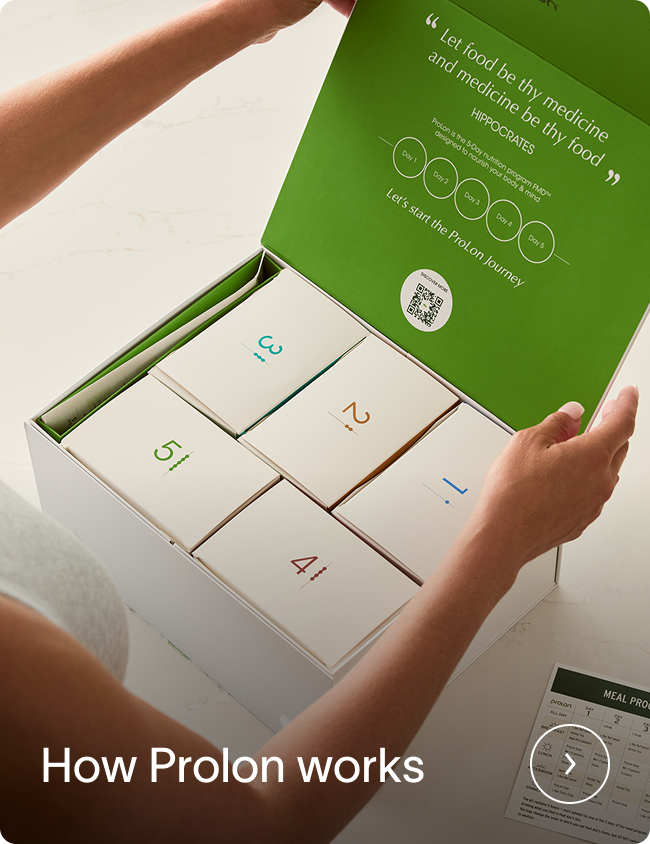
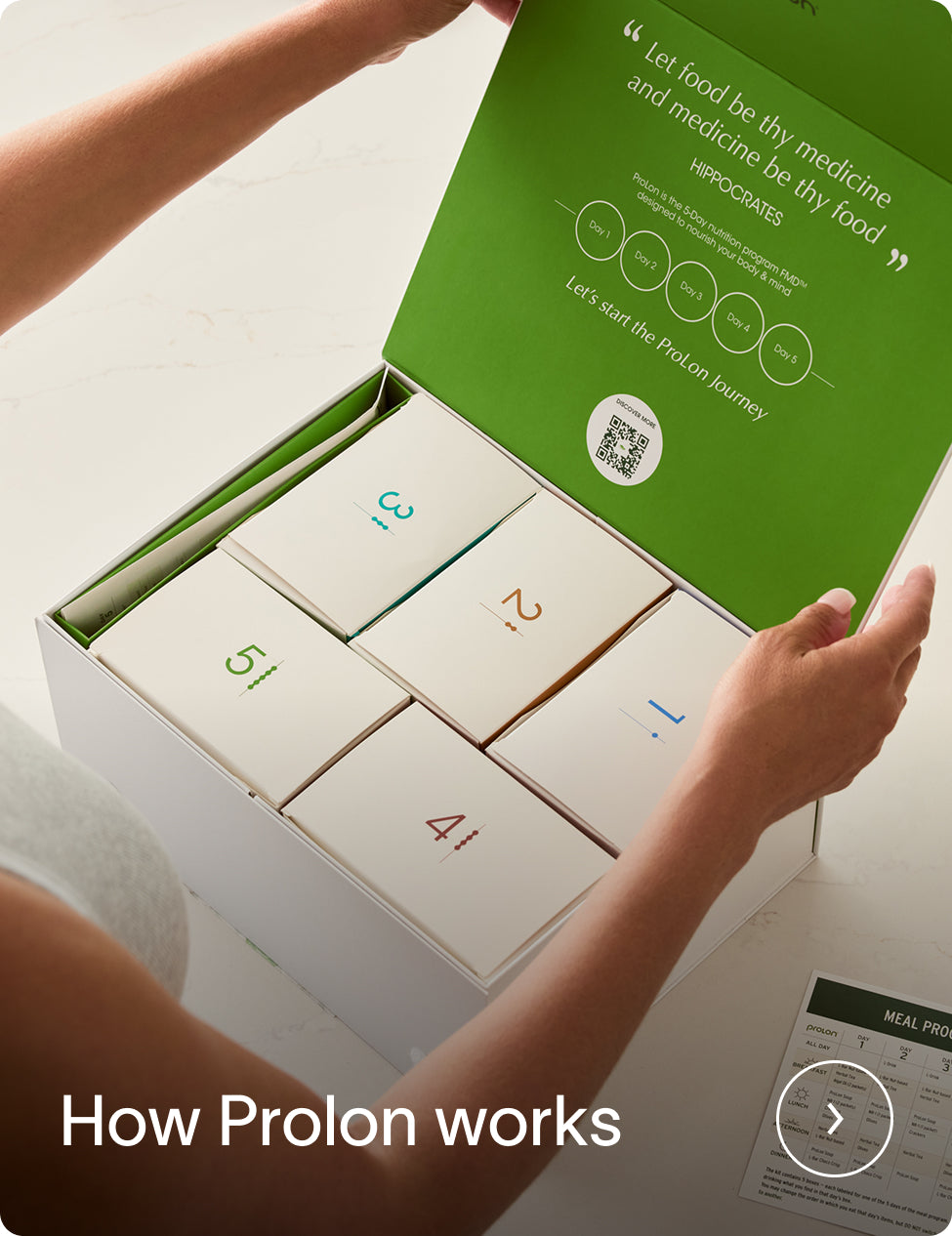
The kit includes:
- vegetable-based soups;
- carefully selected snacks;
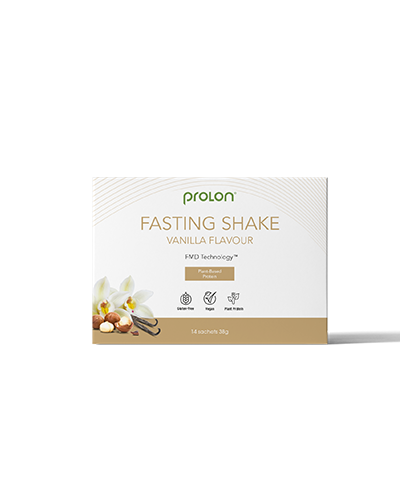
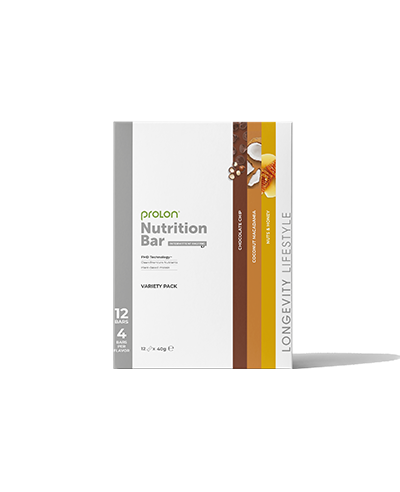
- bars specifically formulated for the protocol;
- specific beverages;
- vitamin and mineral supplements;
- foods containing predominantly unsaturated fats.
Calories are carefully calculated for each day, while the nutritional intake is adjusted throughout the five-day program.
The protocol provides approximately 1,100 calories on Day 1 and around 800 calories on Days 2–5, together with a carefully planned macronutrient distribution.
That level of precision is extremely difficult to reproduce on your own.
ProLon: the scientifically tested Fasting Mimicking Diet
When it comes to the Fasting Mimicking Diet, it's important to make a key distinction between a scientifically developed and clinically tested protocol and a generic low-calorie diet created at home.
ProLon is a patented, clinically tested nutritional program specifically designed to mimic fasting through a scientifically formulated diet.
Published ProLon data highlight:
- dozens of clinical studies focused on fasting-mimicking technology;
- collaborations with numerous universities and international research centers;
- patents developed in the fields of nutrition and longevity;
- significant investment in scientific research.
These elements make a substantial difference compared with any protocol created independently.
Even Professor Valter Longo advises against going DIY
One particularly interesting point comes from the experience of the researchers who developed the Fasting Mimicking Diet.
In an interview published on the ProLon blog, Professor Valter Longo explained that, in the early stages of the research, patients were allowed to create their own version of the diet.
Over time, however, the research team realized that this approach could be problematic, both because it could expose people to potential risks and because it could not guarantee the effectiveness of the protocol.
This is an important point and further highlights why following a validated program is preferable to trying to recreate the protocol based on personal interpretation.
The Fasting Mimicking Diet cannot simply be reduced to a meal plan that you can copy at home.
Behind the ProLon protocol are years of research, clinical studies, independent testing, and a formulation specifically developed to support particular metabolic mechanisms.
If you're thinking about trying a DIY Fasting Mimicking Diet, keep in mind that:
- eating less doesn't necessarily mean mimicking fasting;
- changing the calorie intake can alter the protocol;
- replacing foods from the kit may compromise its effectiveness;
- safety and outcomes depend on following the original formulation.
For these reasons, the safer approach is to rely on a scientifically designed program such as the ProLon kit, developed to deliver the benefits of fasting-mimicking nutrition through a complete, structured protocol backed by scientific research.


